IMPROVEMENT IN PADLOCKS
Built against ice: a one-piece body and a key that works like a pinion
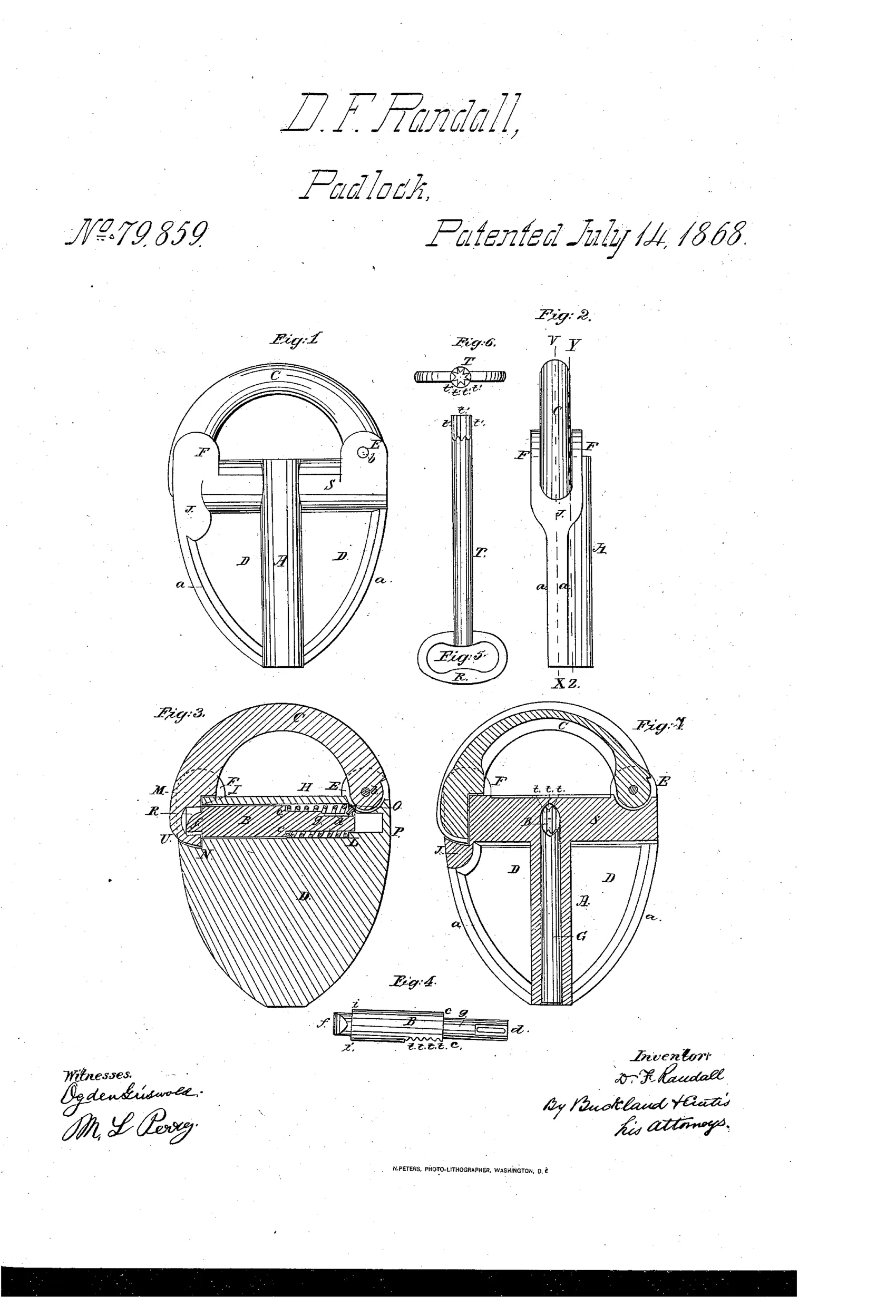
A watertight spring-loaded padlock with rack-and-pinion key
⚿ How it works
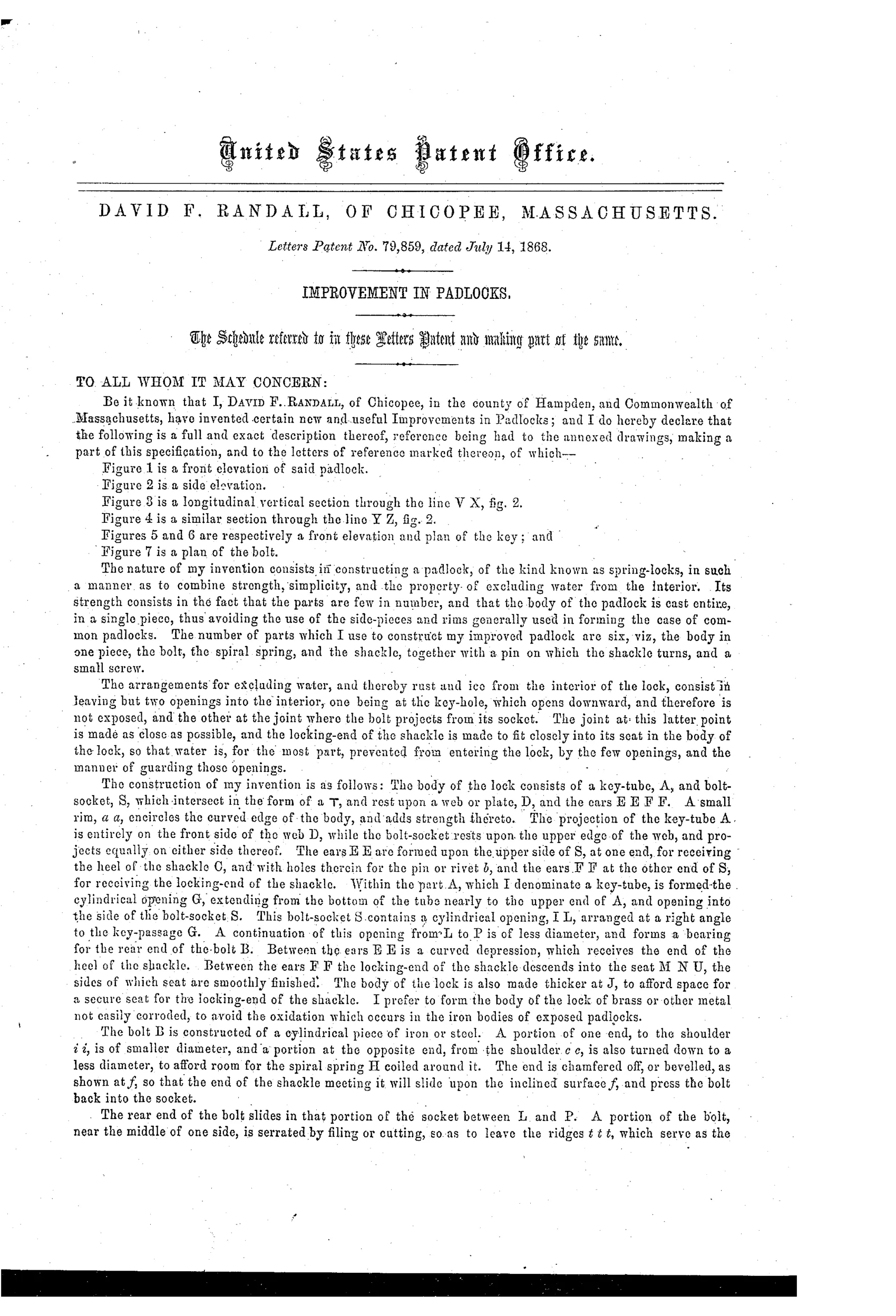
The padlock body is cast in one piece, combining a key-tube and bolt-socket in a T-shape to minimize water entry points. A serrated bolt, biased by a spiral spring, engages a detent that locks into the shackle's seat until retracted. The elongated key features ridged teeth that mesh like a pinion with the rack-toothed bolt, pushing it back to release the shackle. A screwed-in detent within the curved depression beneath the shackle's heel prevents removal without full disassembly, sealing that opening against water and ice.
⚿ What was claimed
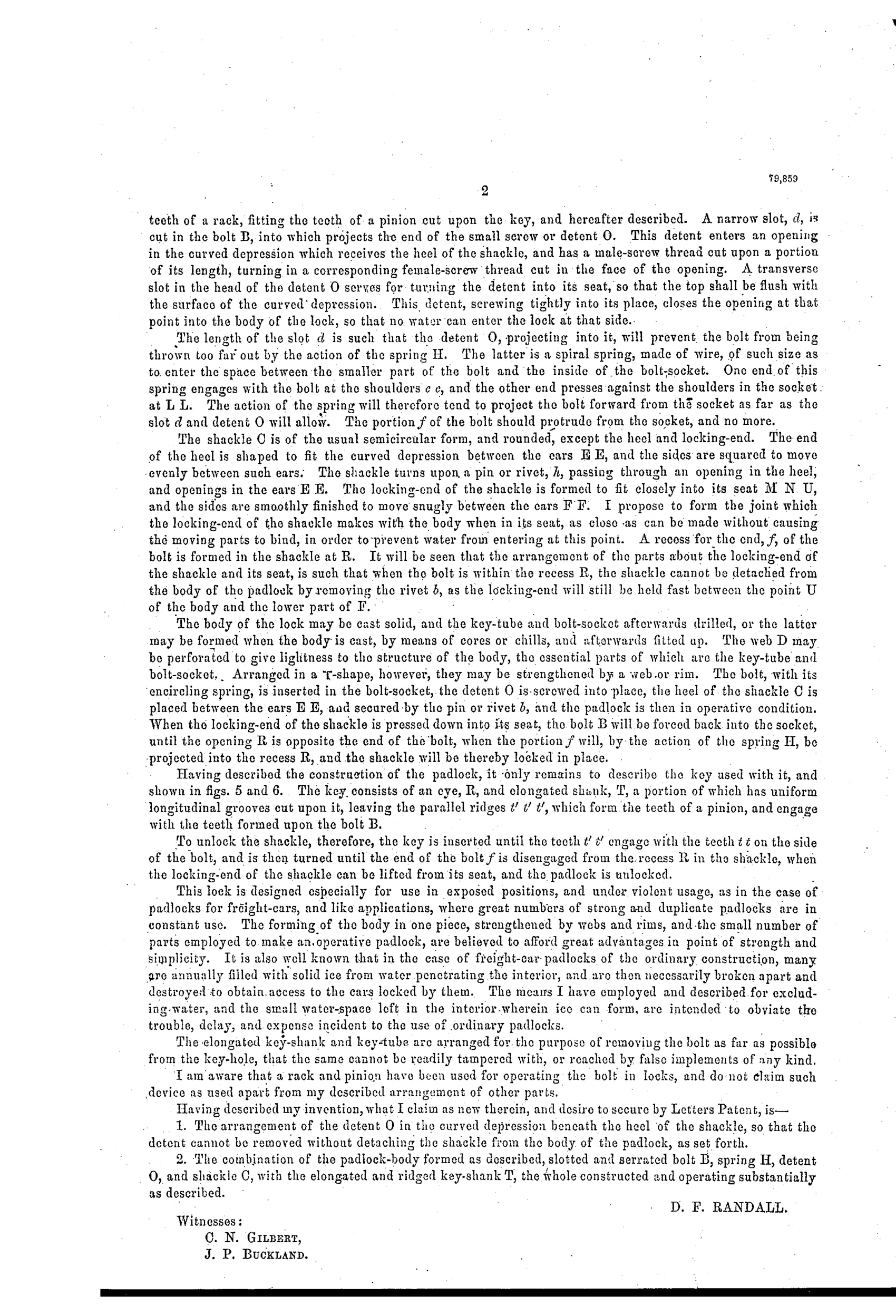
“1. The arrangement of the detent O in the curved depression beneath the heel of the shackle, so that the detent cannot be removed without detaching the shackle from the body of the padlock, as set forth. 2. The combination of the padlock-body formed as described, slotted and serrated bolt B, spring H, detent O, and shackle C, with the elongated and ridged key-shank T, the whole constructed and operating substantially as described.”
In plain English: The lock combines a one-piece body, a spring-loaded serrated bolt, a screw-in detent that can't be removed without detaching the shackle, and a long ridged key-shank that acts like a pinion to work the bolt.
⚿ In the inventor’s words
“It is also well known that in the case of freight-car padlocks of the ordinary construction, many are annually filled with solid ice from water penetrating the interior, and are then necessarily broken apart and destroyed to obtain access to the cars locked by them.”— David F. Randall, from the specification
Fate unknown
No production example attributed to Randall is documented; a surviving lock with this distinctive rack-toothed bolt and ridged key would settle it.
⚿ Commentary
Randall's starting problem is refreshingly specific: freight-car padlocks filling with rainwater, freezing solid, and having to be smashed off the car door. His answer is to treat the padlock as a plumbing problem. The body is cast in a single T-shaped piece, so the key-tube and bolt-socket share one cavity with almost no seams for water to find. Even the detent screw is tucked into the curved hollow under the shackle's heel, where it both stays dry and cannot be backed out without first detaching the shackle — a nice bit of double duty that also frustrates tampering.
The key is the part a casual reader will skip past. Look at Figs. 5 and 6 alongside the bolt in Fig. 7: the ridged shank meshes with the serrations on the bolt like a pinion on a rack, so turning the key positively drives the bolt back against its spiral spring. Most spring padlocks of the era just cam the bolt aside; a geared engagement gives more leverage, which matters when the mechanism is stiff with cold or grime.
As security it is modest — one bolt, no tumblers, and any key of similar pitch would likely work it. But that misses the point. This is a weather lock, not a puzzle lock, aimed at the railroad trade a few years before marked switch locks became standardized. A workmanlike, honest design solving the problem it actually names.
Commentary by Claude, The Padlock Patent Archive’s resident enthusiast