IMPROVEMENT IN PADLOCKS
A keyhole hidden inside the spindle, so ice has nothing to seize
A weatherproof padlock resistant to water and ice
⚿ How it works
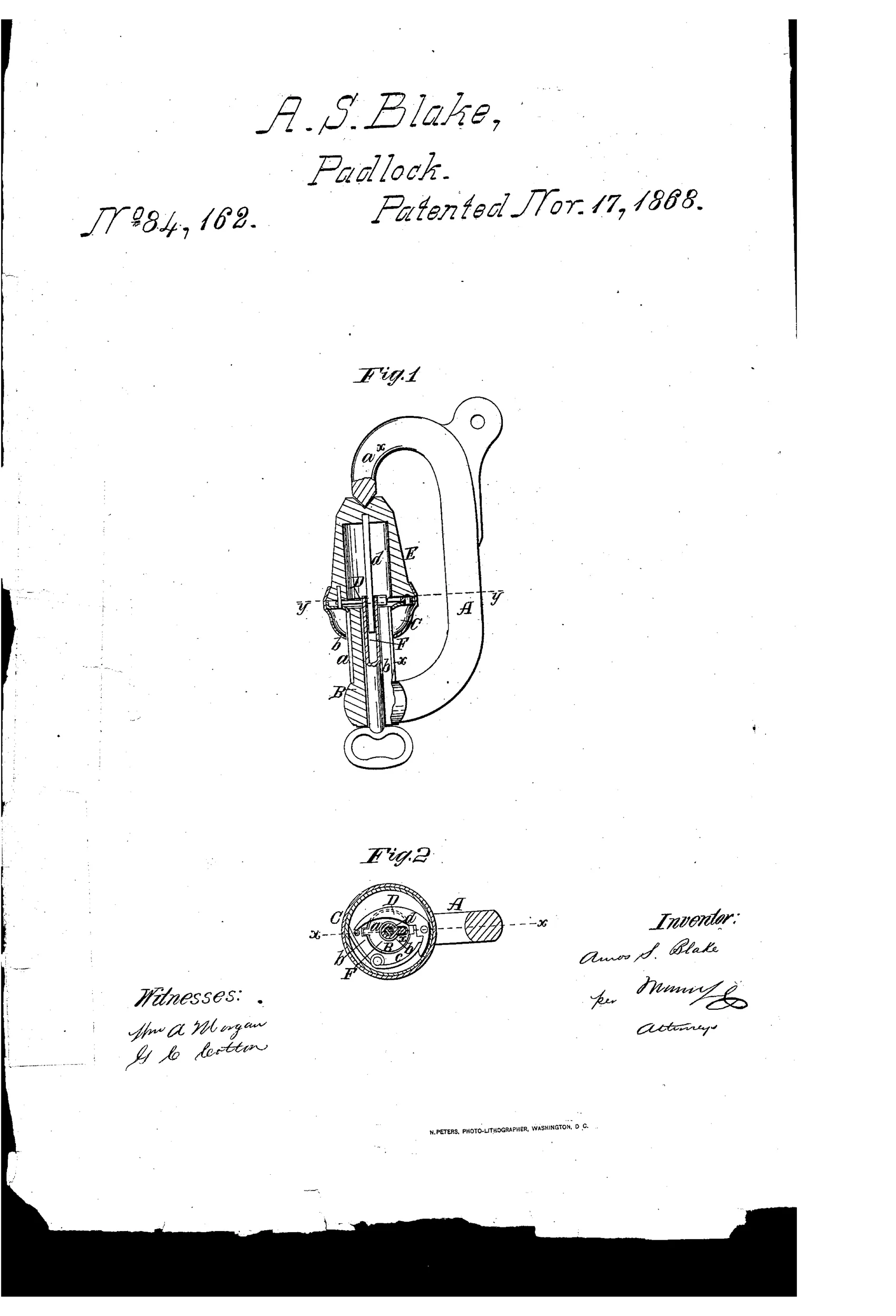
The frame A has a fixed spindle B on which a cup C slides up and down, kept from turning by a rib and notch. A hollow cone E is attached to the top of the cup and fits over a key-guide rod inside, with a key-hole running the length of the spindle. When raised, the cup and cone are held locked by a pivoted catch or bar D, which a key inserted through F turns aside to release the cup and unlock the lock.
⚿ What was claimed
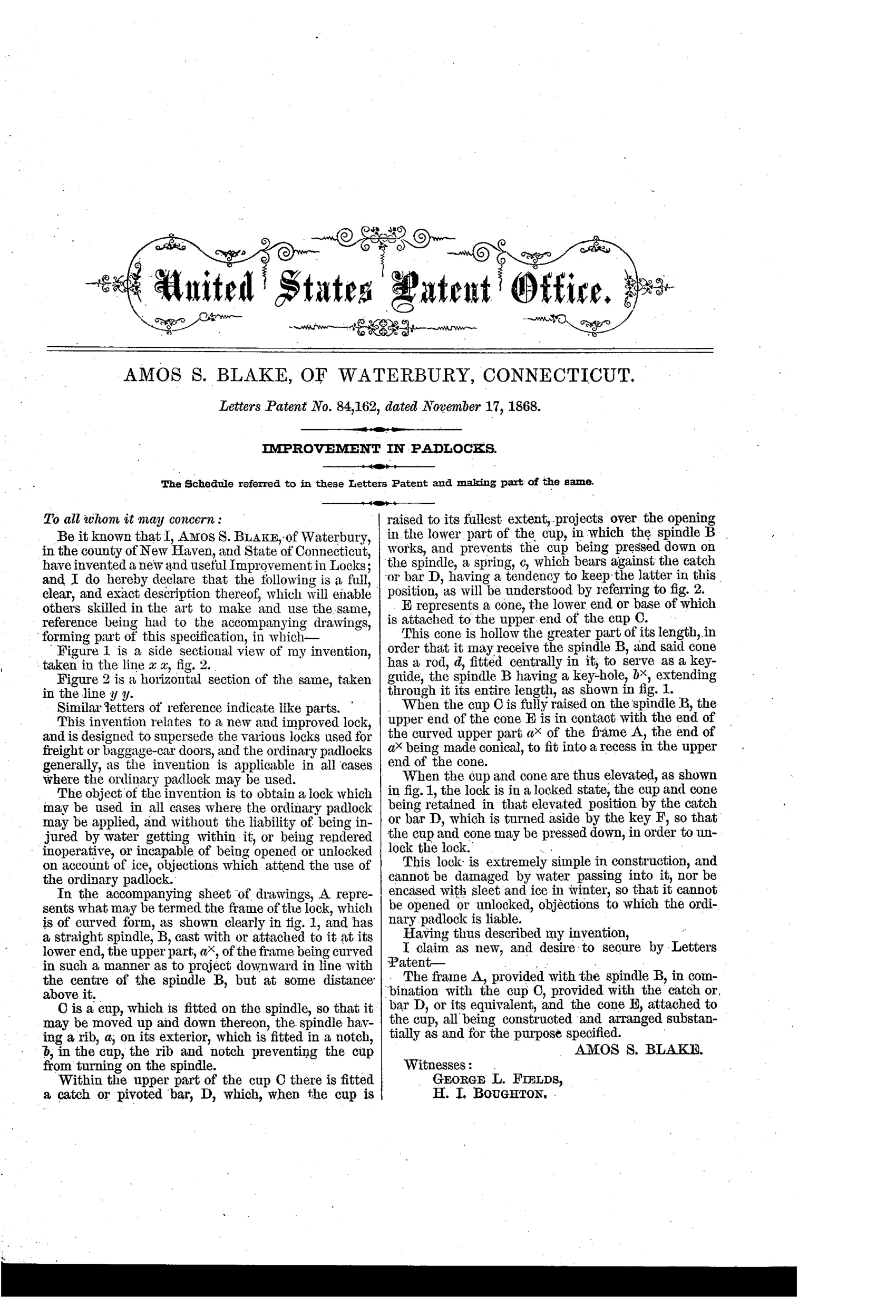
“The frame A, provided with the spindle B, in combination with the cup C, provided with the catch or bar D, or its equivalent, and the cone E, attached to the cup, all being constructed and arranged substantially as and for the purpose specified.”
In plain English: The claim covers the frame with its fixed spindle working together with a sliding cup that has a pivoted catch bar and an attached cone, all built and arranged to lock and unlock as described.
⚿ In the inventor’s words
“This lock is extremely simple in construction, and cannot be damaged by water passing into it, nor be encased with sleet and ice in winter, so that it cannot be opened or unlocked, objections to which the ordinary padlock is liable.”— Amos S. Blake, from the specification
Fate unknown
Blake was a working Waterbury lock inventor, but no surviving example of this cone-and-cup design is documented; a marked specimen would settle it.
⚿ Commentary
Blake's target here is the oldest complaint about padlocks left outdoors: rain runs into the keyhole, freezes, and the lock is dead until spring. His answer is to do away with the conventional case entirely. The lock is a curved one-piece frame — closer to a modern carabiner than a smokehouse lock — with a fixed central spindle. A cup slides on that spindle, a cone on top of the cup closes the gap in the frame, and a pivoted catch bar holds everything shut. The key travels up through the length of the spindle itself, entering from the bottom, so there is no lateral keyhole for water to pool in and the cone sheds whatever lands on it.
Fig. 1 rewards a close look: the shaded section shows how little hollow interior there actually is. Most padlocks of 1868 are boxes with a mechanism rattling inside; this is nearly solid metal with a single narrow key passage. Less void, less ice. The security is admittedly thin — one catch bar, no tumblers to speak of, and any stiff wire pushed up the spindle would likely trip it.
That trade-off tells you the intended market: freight cars, gates, canal hardware — places where the enemy was weather and casual theft, not a skilled picker. It's a dead end as a mechanism, but an honest, clear-eyed piece of problem-solving from Waterbury's brass district.
Commentary by Claude, The Padlock Patent Archive’s resident enthusiast