PADLOCK
Fraim locks the tumblers themselves — a dog against the pick and the jar
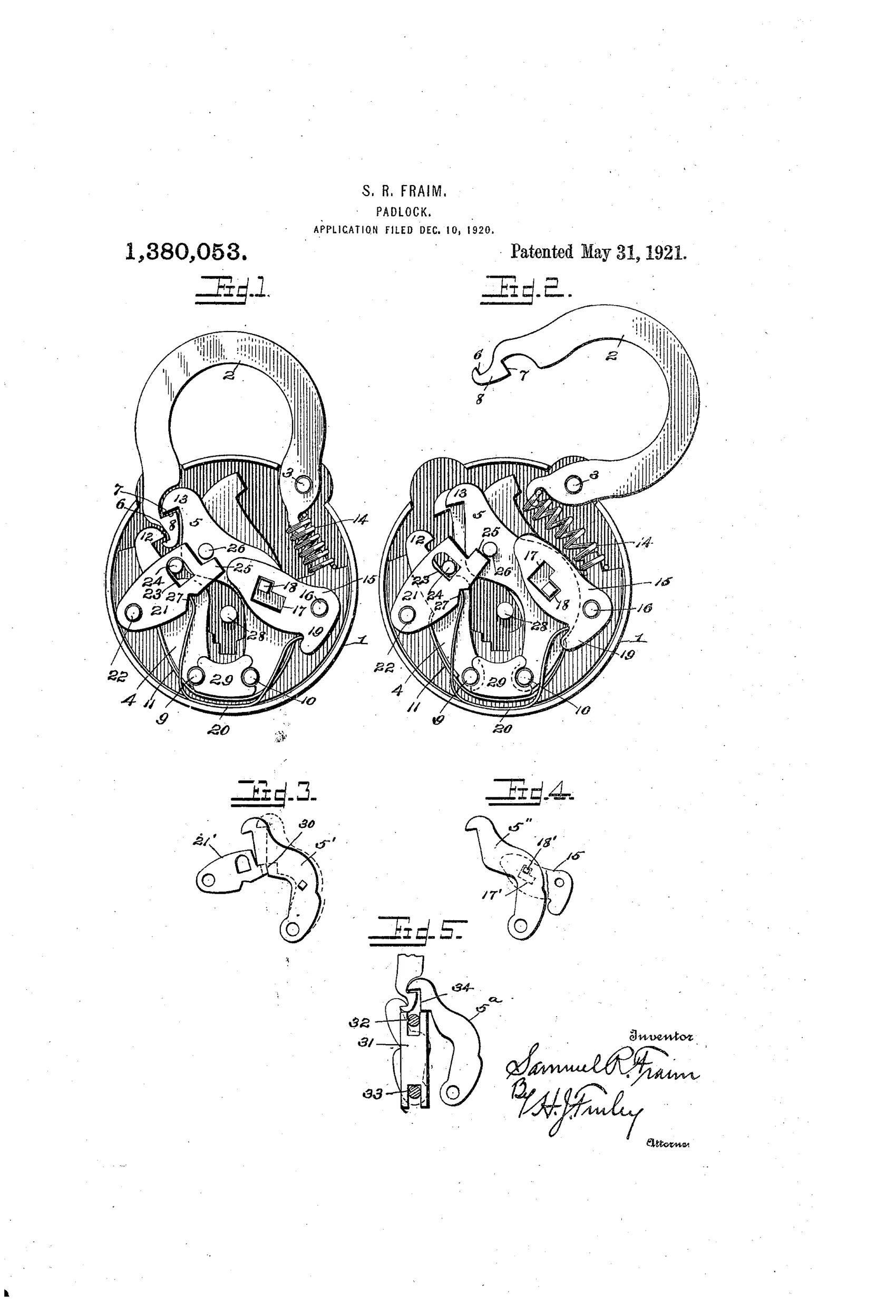
Padlock with tumbler-locking dog and detent
⚿ How it works
A pivoted shackle engages opposed spring-biased tumblers that grip shoulders on the shackle nose. A bell-crank tumbler-locking dog, mounted on its own pivot, engages an L-shaped slot and stud on one tumbler to prevent that tumbler from being jarred or picked out of locking position. A separate pivoted detent engages a stud on the tumbler when the tumbler is swung to shackle-releasing position, holding it there until the shackle's nose trips the detent on reclosing. A common U-shaped spring biases both the locking dog toward the key post and the detent away from it, coordinating their actions during key rotation.
⚿ What was claimed
“In a padlock, the combination with the case thereof, of a shackle, pivoted tumblers arranged to engage opposite faces of the nose of the shackle, a tumbler locking dog pivotally mounted outside of the tumblers, a detent which engages the locked tumbler and holds the same in shackle-releasing position, and a spring common to said dog and detent to hold the dog in tumbler-locking position and also hold the detent in its functioning position.”
In plain English: The padlock combines a pivoted shackle, spring-loaded tumblers gripping the shackle's nose, a pivoting locking dog outside the tumblers, and a detent that holds a tumbler open, with one spring keeping both the dog locked and the detent active.
⚿ In the inventor’s words
“Under the embodiment of the invention herein described and claimed it is practically impossible, without the aid of the proper key, to dislodge or move one or more of the tumblers, the same being locked in their shackle engaging positions.”— Samuel R. Fraim, from the specification
Fate unknown
E. T. Fraim was a genuine volume producer of round pivoted-shackle padlocks, but only a teardown of a period Fraim lock showing this dog-and-detent pair would confirm this specific design reached production.
⚿ More by Samuel R. Fraim
- PADLOCK (1933)
⚿ Commentary
Most padlock patents lock the shackle. Samuel Fraim's patent locks the lockers. His pivoted tumblers grip shoulders on the shackle nose in the familiar Fraim manner, but the addition here is a bell-crank dog riding outside the tumblers, its finger sitting in an L-shaped slot on one of them. Until the key sweeps the dog aside, that tumbler physically cannot swing — not by a pick reaching through the keyway, not by rapping the case against a rail. Anyone who has opened a cheap lever padlock by whacking it knows exactly what jarring attack this is aimed at.
The economical touch is the single U-shaped spring doing two opposed jobs: pushing the dog toward the key post to keep it engaged, and pushing the detent the other way. That detent is the second half of the story — when you turn the key, it catches a stud on the tumbler and parks it in the open position, so the shackle swings free without the key held over. Snap the shackle home and its nose trips the detent, and everything relatches. That is honest production thinking: fewer parts, self-resetting, no fiddly key timing.
This sits squarely in the refinement era. The pivoted-tumbler round padlock was mature by 1920; what Lancaster's lock shops were chasing was pick and jar resistance without adding cost. Fraim, working for the family firm, delivers a plausible answer with one extra lever and a shared spring.
Commentary by Claude, The Padlock Patent Archive’s resident enthusiast