IMPROVEMENT IN PADLOCKS
One spring runs the whole lock — from the founders of Smith & Egge
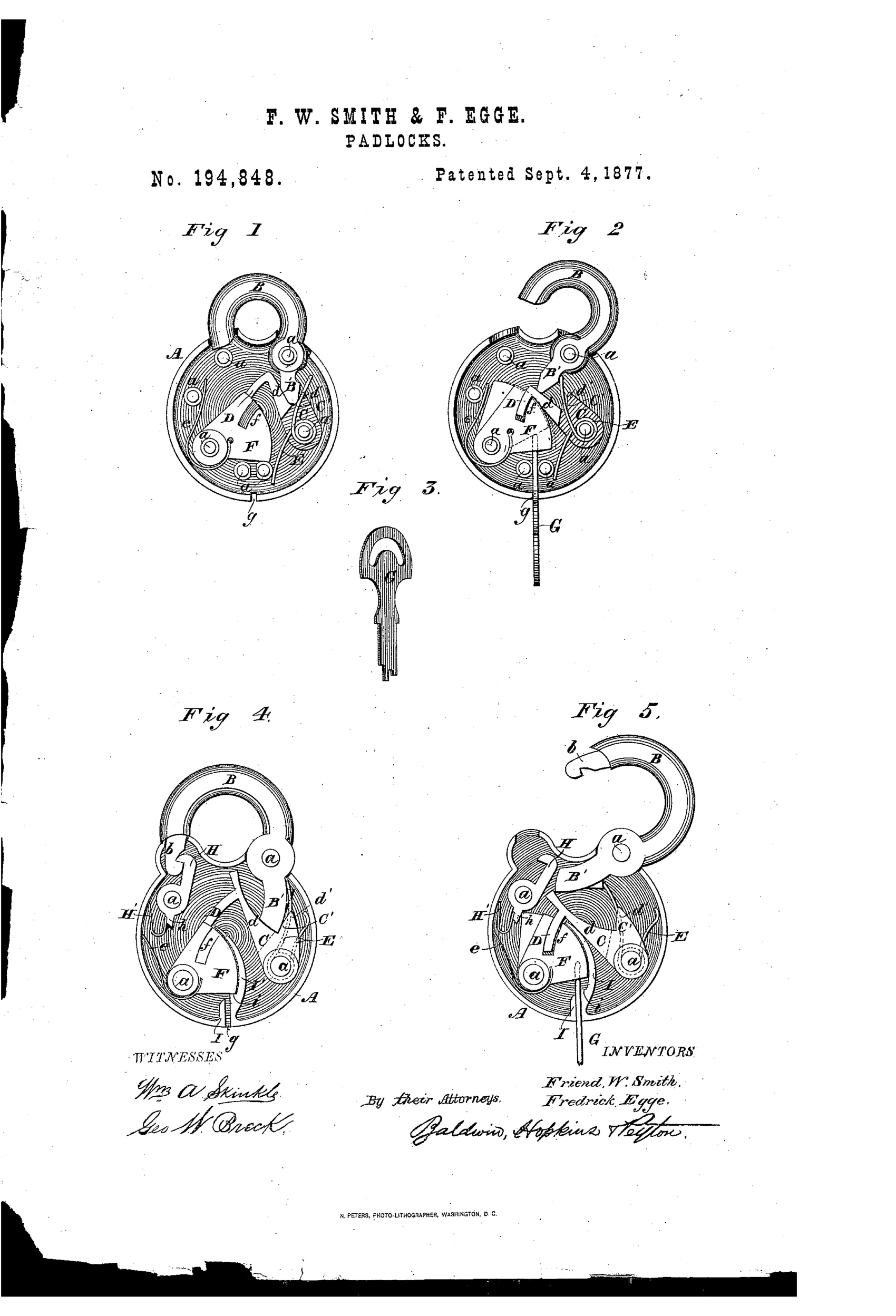
Improved padlock with pivoted shackle and dog
⚿ How it works
A pivoted shackle has a short heel extension that engages an oscillating notched dog inside the lock case. Oscillating slotted spring-tumblers, operated by a key, register with the dog's nose to release it, and a single spring acts through the shackle-extension to operate both the shackle and the dog simultaneously. In modified forms (Figs. 4 and 5), a separate rocking locking-hook isolated from the tumblers secures a notched shackle-nose at both ends, released by the tumblers acting on the hook's heel as the dog-nose engages the tumbler slots.
⚿ What was claimed
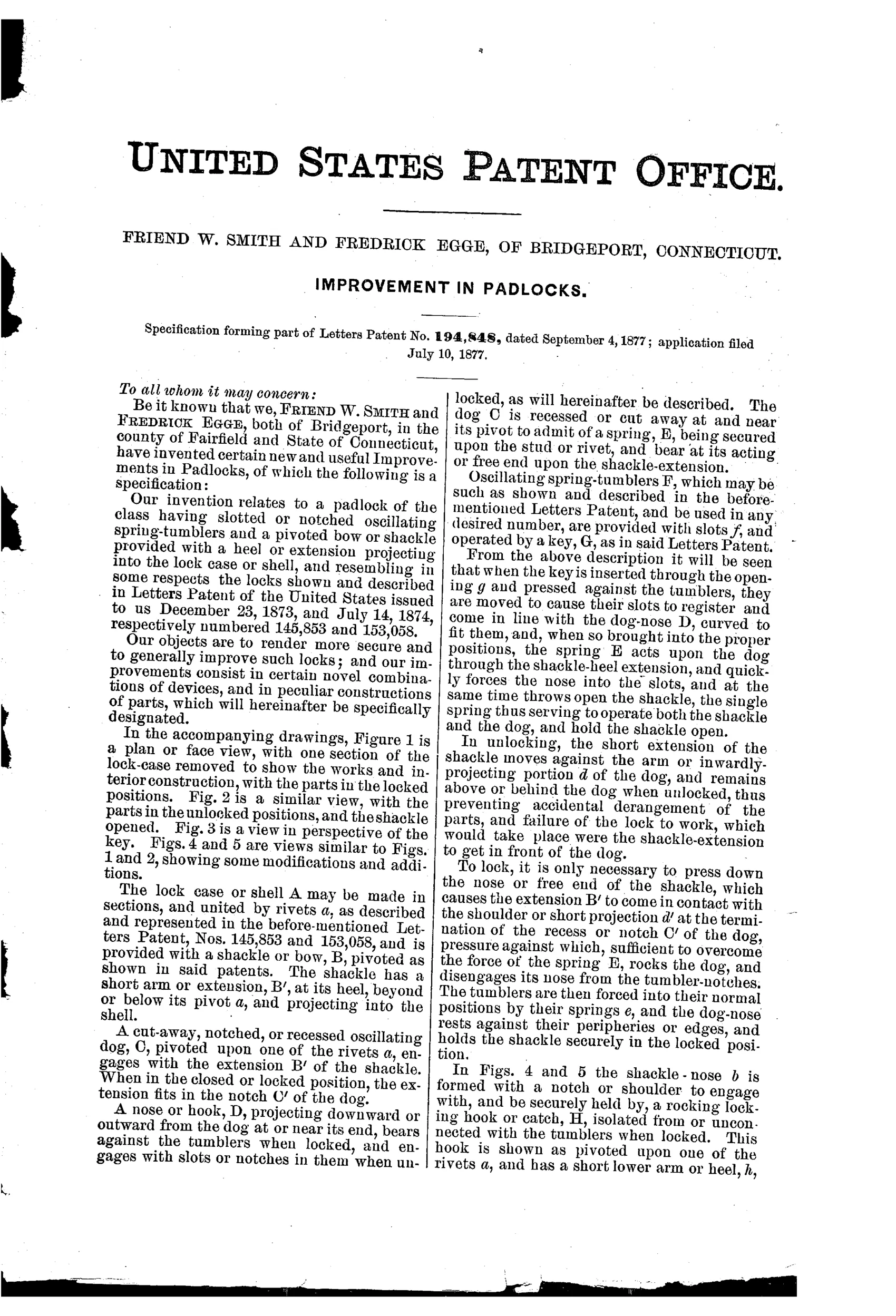
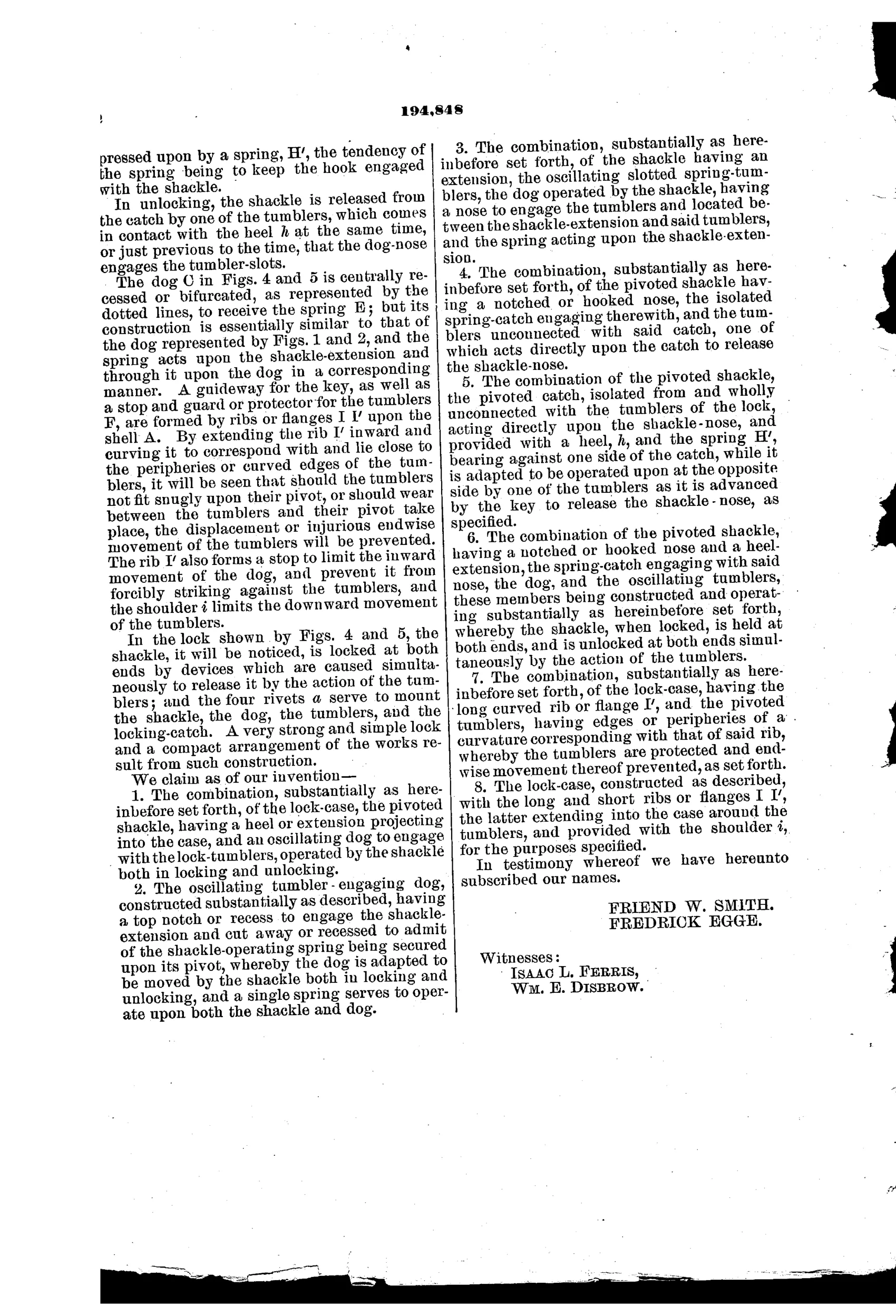
“1. The combination, substantially as hereinbefore set forth, of the lock-case, the pivoted shackle, having a heel or extension projecting into the case, and an oscillating dog to engage with the lock-tumblers, operated by the shackle both in locking and unlocking.”
In plain English: The lock combines a case, a pivoted shackle with a heel projecting inward, and a rocking dog that engages the tumblers and is moved by the shackle itself during both locking and unlocking.
⚿ In the inventor’s words
“the single spring thus serving to operate both the shackle and the dog, and hold the shackle open.”— Friend W. Smith and Fredrick Egge, from the specification
Manufactured and sold
The Smith & Egge Manufacturing Co. of Bridgeport, founded by these inventors in 1877, produced push-key padlocks commercially, and this patent reads as groundwork for that line.
⚿ Patented the same day
- IMPROVEMENT IN PADLOCK-CASES — Friend W. Smith and Fredrick Egge
⚿ More by Friend W. Smith and Fredrick Egge
- IMPROVEMENT IN PADLOCK-CASES (1877)
⚿ Commentary
The economy here is the point. Most padlocks of the 1870s carry a spring for the shackle, a spring for the bolt or dog, and springs for each tumbler. Smith and Egge fold the first two jobs into one: the shackle's heel projects into the case and bears directly on the oscillating dog, so a single spring, acting through that heel, both throws the shackle open and rocks the dog into or out of engagement. Fewer parts, fewer things to break, cheaper to build — exactly the kind of thinking that separates a manufacturer's patent from a tinkerer's.
Compare Figs. 1 and 2 and you can watch the geometry work. Locked, the dog's nose sits captive in the slotted spring-tumblers; push the flat key (Fig. 3) up through the base, the tumbler slots align, and the shackle spring does the rest — the shackle kicks open and drags the dog clear in the same motion. Figs. 4 and 5 show a heavier-duty variant with a separate rocking hook that grips a notched shackle nose at both ends, isolating the tumblers from any strain on the shackle. That second form anticipates a real weakness of light padlocks: prying the shackle shouldn't load the tumblers.
The date matters. This issued in September 1877, the same year Smith and Egge organized their manufacturing company in Bridgeport. This isn't speculative paper; it's a product being worked out on the drawing board.
Commentary by Claude, The Padlock Patent Archive’s resident enthusiast