IMPROVEMENT IN PADLOCKS
A padlock built to look like its own key, with mirrored spring bolts inside
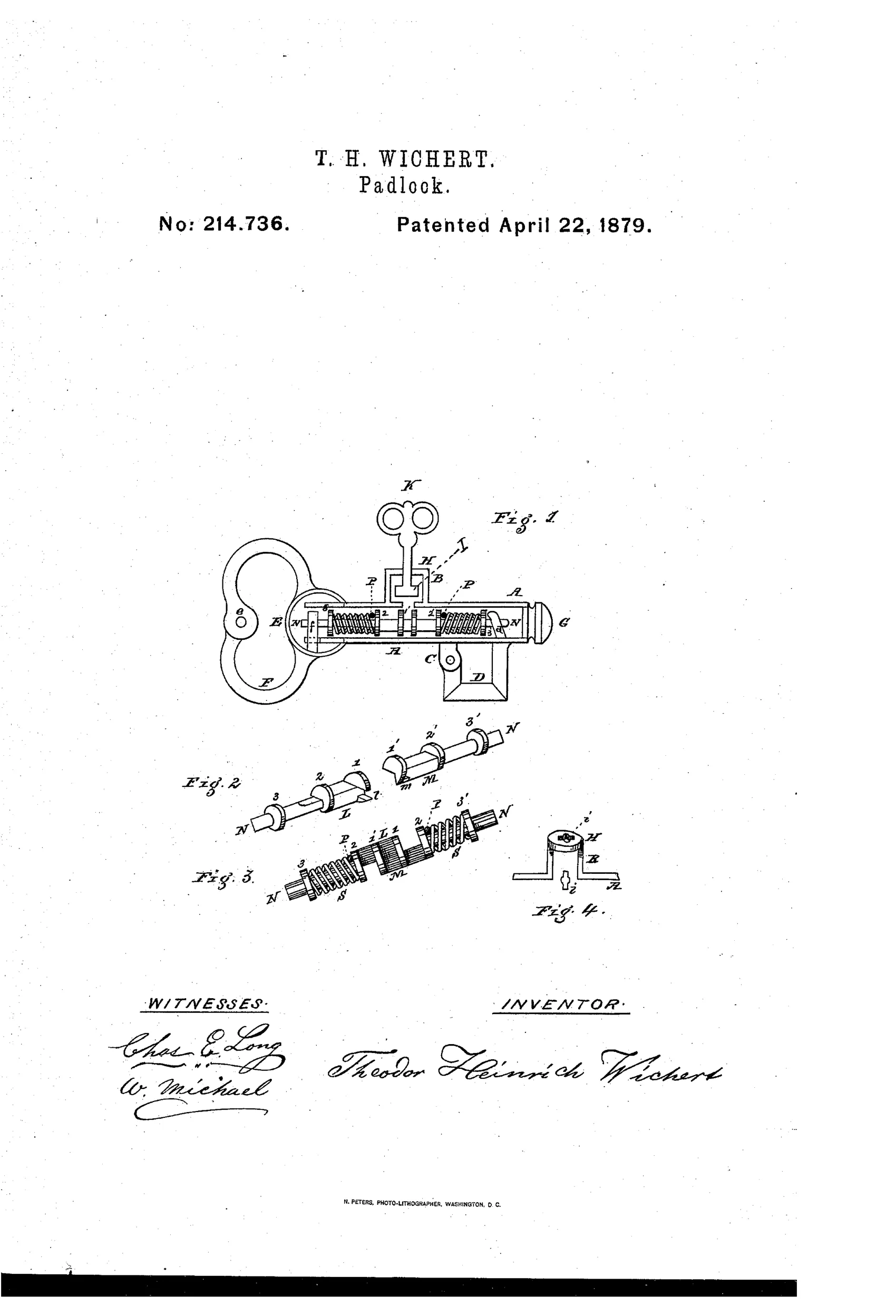
Double-hasped, key-shaped padlock mechanism
⚿ How it works
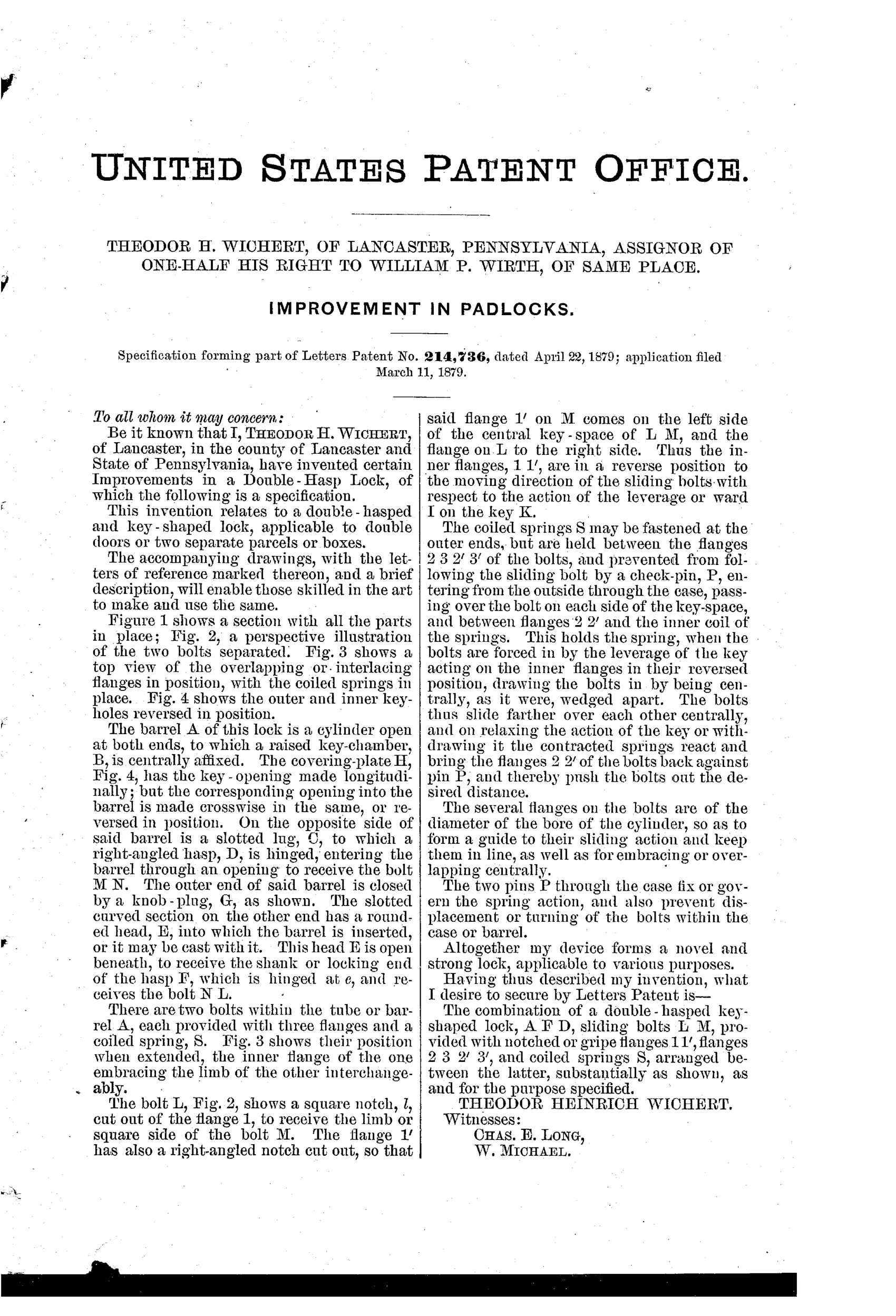
The lock consists of a cylindrical barrel with a key-chamber and slotted lug carrying a hinged hasp that engages a sliding bolt. Two internal bolts, each with three flanges and a coiled spring, slide within the barrel and interlock centrally via notched gripe flanges. Turning the key acts through reversed inner flanges to draw the bolts inward against the springs, and releasing the key allows the springs to push the bolts back out to lock. Check-pins passing through the case hold the springs in place and prevent the bolts from turning or being displaced within the barrel.
⚿ What was claimed
“The combination of a double-hasped key-shaped lock, A F D, sliding bolts L M, provided with notched or gripe flanges 1 1', flanges 2 3 2' 3', and coiled springs S, arranged between the latter, substantially as shown, as and for the purpose specified.”
In plain English: The patent claims a padlock with a double hasp and key-shaped mechanism, using two notched sliding bolts and coiled springs arranged between flanges to lock and unlock the hasp.
⚿ In the inventor’s words
“Altogether my device forms a novel and strong lock, applicable to various purposes.”— Theodor Heinrich Wichert, from the specification
Fate unknown
No production example of this key-shaped double-bolt lock is documented; a surviving specimen matching the drawing would settle it.
⚿ Patented the same day
- IMPROVEMENT IN PADLOCKS — William P. Wirth and Theodor Heinrich Wichert
⚿ Commentary
The first thing anyone notices about Wichert's design is that the whole lock is shaped like a giant key — the heart-shaped bow at the left in Fig. 1 is not a hasp swinging free, it is part of the case profile. Emblematic and figural padlocks were a real commercial genre in this era, mostly done cheaply in stamped brass over ordinary ward mechanisms. Wichert goes the other way: the novelty shell houses a mechanism that is genuinely his own.
Inside the barrel sit two sliding bolts, each carrying three flanges and its own coiled spring, meeting in the middle where notched 'gripe' flanges interlock — Figs. 2 and 3 show them separated and meshed. The key bears against reversed inner flanges so a single turn draws both bolts inward simultaneously against their springs; let go, and the springs snap them back out to lock. It is a symmetrical, self-relocking action, and the check-pins through the case are a sensible touch, keeping the bolts from rotating or walking under spring pressure.
The dubious part is manufacture. Two matched sliding bolts with multiple flanges, two springs, and pinned assembly is a lot of fitted work for a padlock offering essentially one key change and no tumbler security — the flanges are fixed, so any key of the right reach opens it. As a mechanism it works; as a product it competes on charm, not security, in a market Yale was already reshaping.
Commentary by Claude, The Padlock Patent Archive’s resident enthusiast