HASP-LOCK.
Frank Mix stamps a whole hasp lock from sheet metal, no castings needed
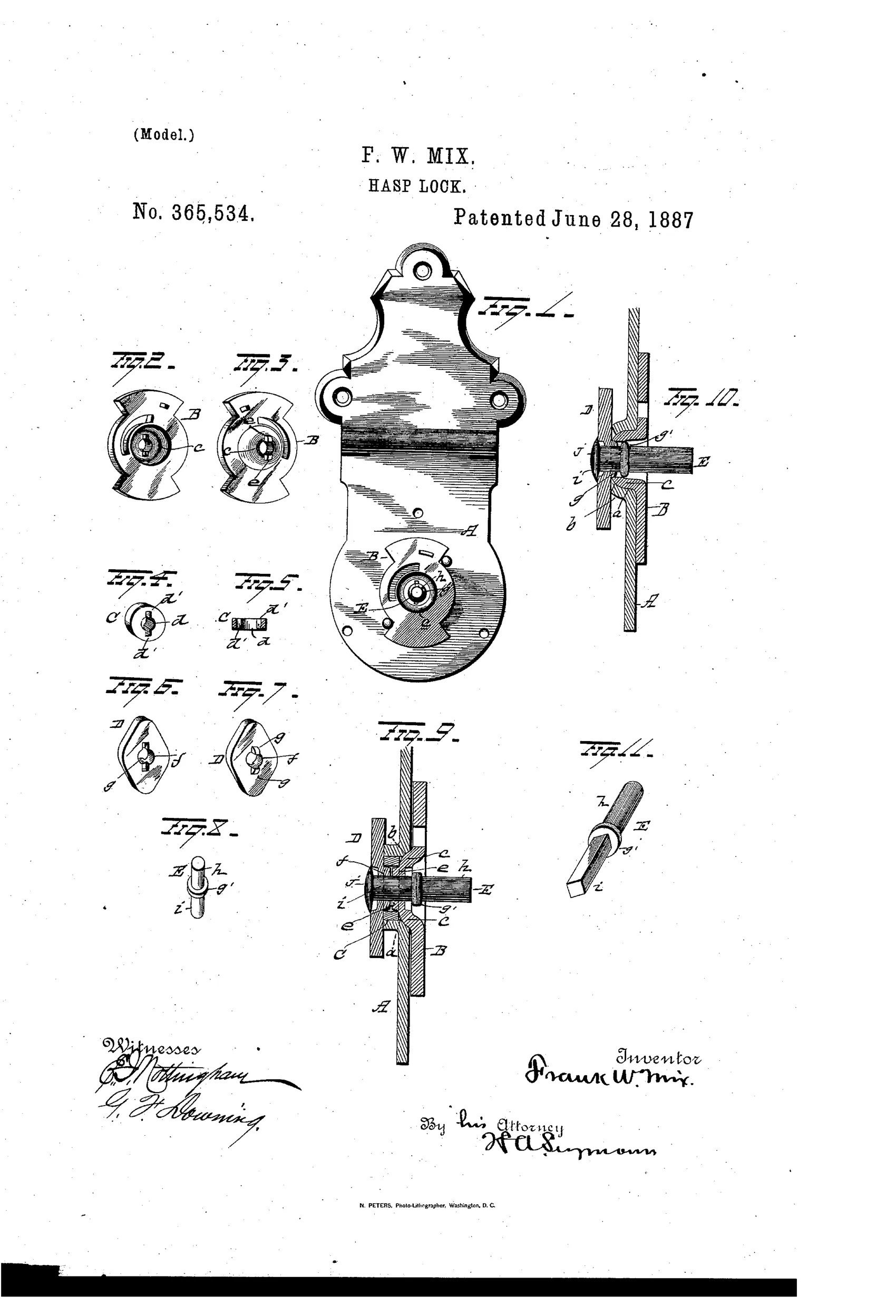
Stamped sheet-metal hasp lock mechanism
⚿ How it works
The lock-bolt, spacing-collet, button, and key-post are all stamped from sheet metal rather than cast, reducing cost and labor. The lock-bolt has a boss that seats in a recess in the hasp-plate to form its bearing surface. Spurs projecting from the lock-bolt interlock with matching openings in the spacing-collet, preventing rotary displacement between the parts. A combined key-post and rivet passes through the hasp-plate, lock-bolt, collet, and button, and is upset at its end to rivet all the parts together into what functions as a single piece.
⚿ What was claimed
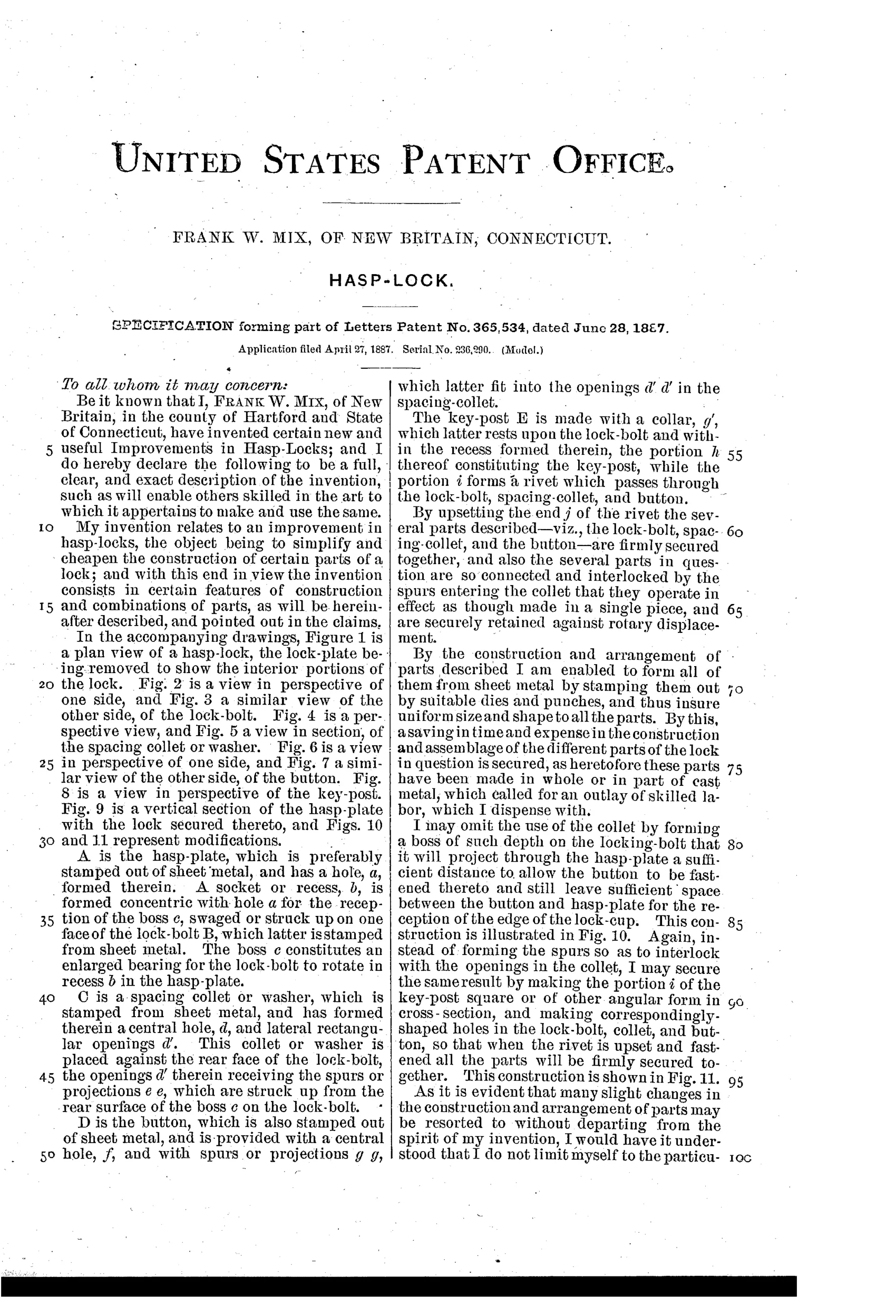
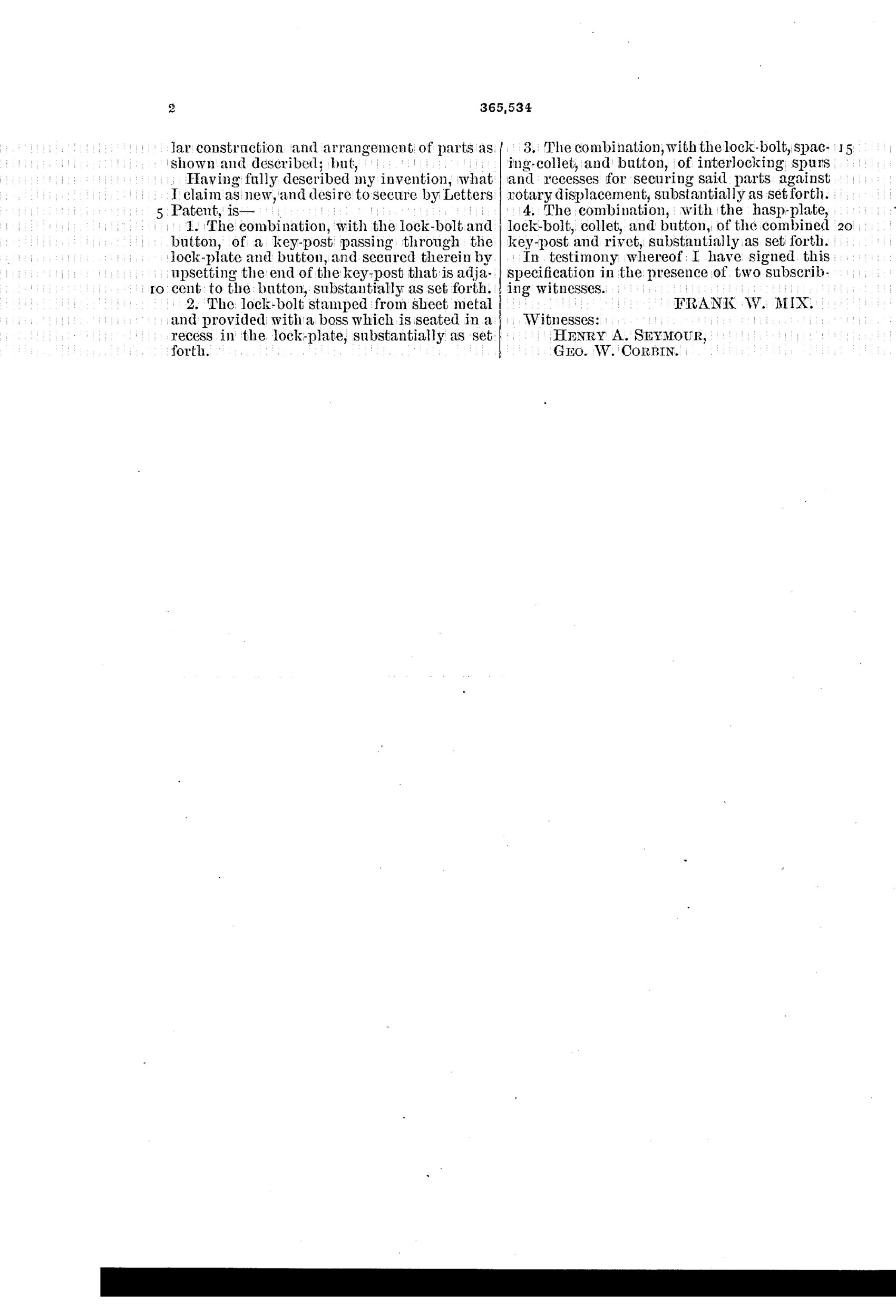
“The combination, with the lock-bolt and button, of a key-post passing through the lock-plate and button, and secured therein by upsetting the end of the key-post that is adjacent to the button, substantially as set forth.”
In plain English: The lock-bolt and button are held together by a key-post that passes through the lock-plate and button and is riveted in place by flattening its end.
⚿ In the inventor’s words
“By this, a saving in time and expense in the construction and assemblage of the different parts of the lock in question is secured, as heretofore these parts have been made in whole or in part of cast metal, which called for an outlay of skilled labor, which I dispense with.”— Frank W. Mix, from the specification
Fate unknown
Mix was a working New Britain lock inventor and stamped hasp locks of this type were common trade goods, but no specimen is documented to this specific patent; a marked or patent-dated example would settle it.
⚿ Commentary
This is not a patent about keeping anyone out. It is a patent about making the same cheap lock cheaper, and it is worth reading for that reason alone. Frank Mix's insight is entirely in manufacturing: the lock-bolt, spacing collet, button, and key-post — parts that hasp-lock makers had been casting and then filing to fit — are all stamped from sheet stock, and the key-post does double duty as the rivet that clinches the whole stack together. Punch the parts, drop them on the post, upset the end, done. His own words are the honest part: he is dispensing with skilled labor, and he says so plainly.
The drawing rewards a slow look. Figures 2 through 8 are essentially an exploded assembly diagram before that convention existed, and Figure 9's section shows how little metal is actually doing the work: a boss on the bolt seats in a recess in the plate to make a bearing, and spurs on the bolt key into openings in the collet so nothing can rotate out of register. Every joint is formed, not machined.
Security-wise this is trivial hardware — a warded hasp lock for a trunk or shed door. But as a document of New Britain's stamped-hardware economy in the 1880s, when Connecticut factories were converting cast goods to sheet metal wholesale, it is a small, tidy piece of the story. Mix was a serious lock man, and this reads like production-floor experience written down.
Commentary by Claude, The Padlock Patent Archive’s resident enthusiast