PADLOCK.
Bohannan's snap-shut heart lock: press the shackle home, no key needed
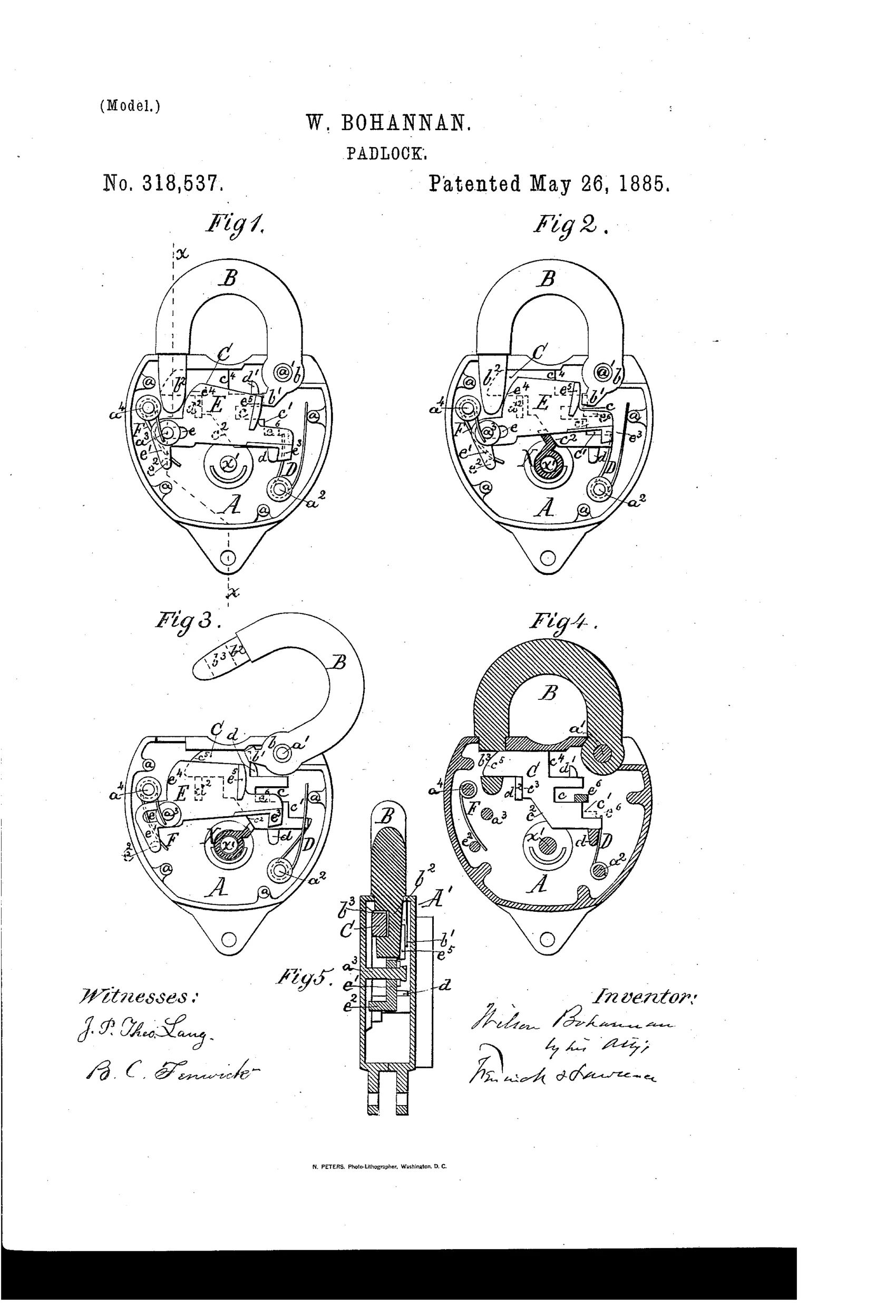
Swinging-shackle padlock with interlocking spring bolt
⚿ How it works
A swinging shackle B is fitted to shell A and locked by a spring-actuated bolt C that enters a notch in the shackle. A pivoted, spring-loaded tumbler E with a raised lug engages a lug on the shackle hub and a step on the bolt, preventing motion until a key rotates the tumbler and clears the bolt from the shackle notch. Pressing the shackle down self-locks the lock without a key, while a key inserted through the keyhole lifts and swings the tumbler to release the bolt and free the shackle. Springs D and F return the bolt and tumbler to their normal locked positions after each operation.
⚿ What was claimed
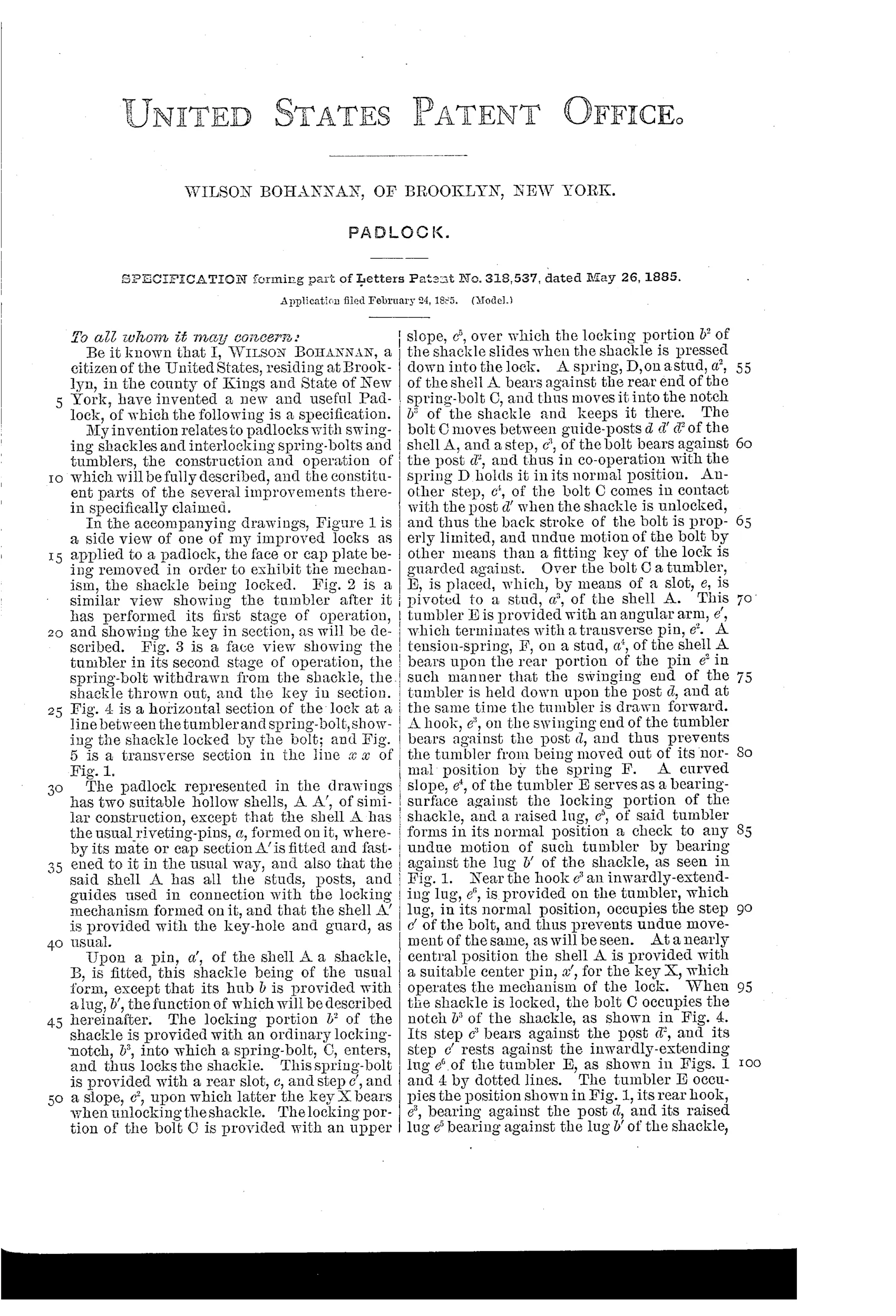
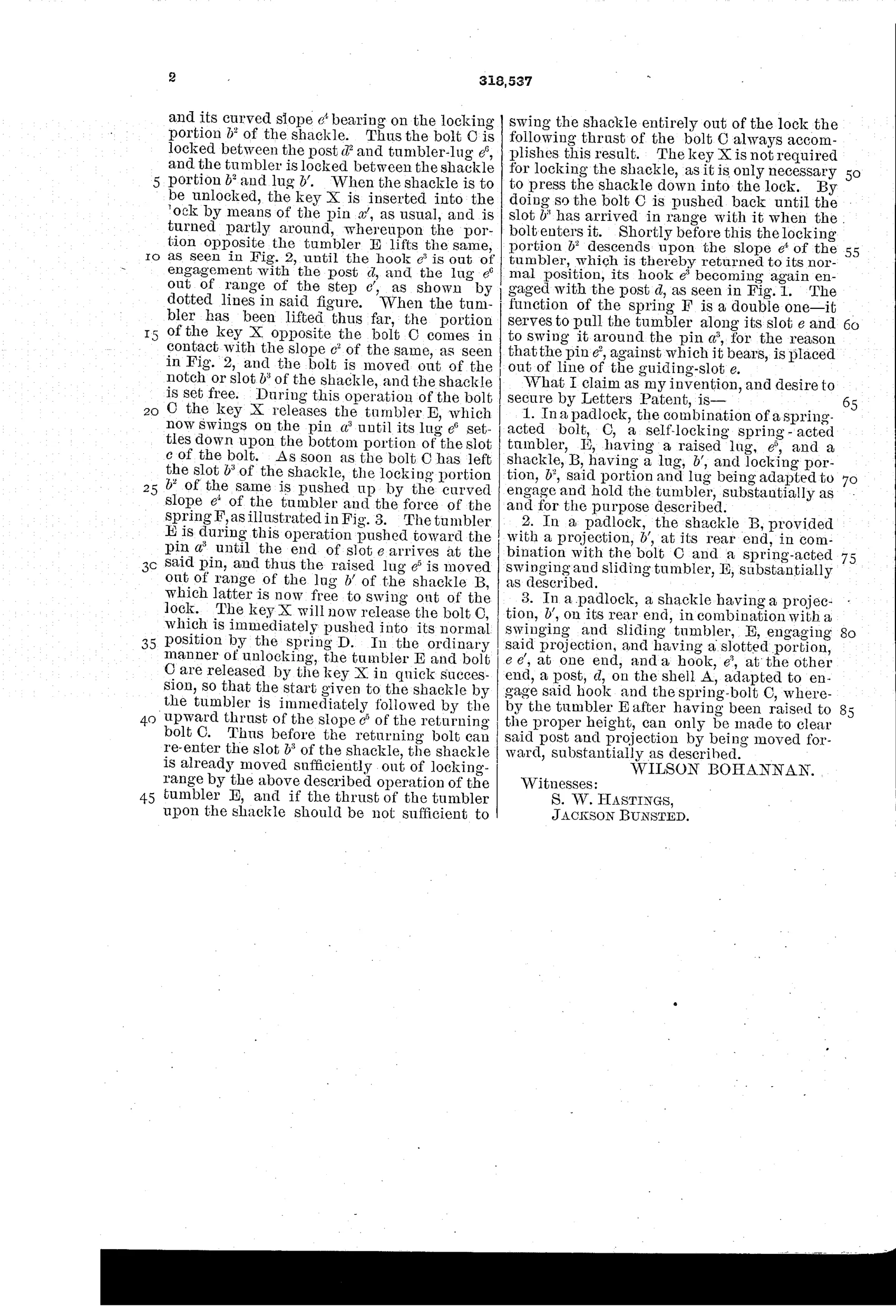
“In a padlock, the combination of a spring-acted bolt, C, a self-locking spring-acted tumbler, E, having a raised lug, e5, and a shackle, B, having a lug, b', and locking portion, b2, said portion and lug being adapted to engage and hold the tumbler, substantially as and for the purpose described.”
In plain English: The lock combines a spring-loaded bolt, a spring-loaded tumbler with a raised lug, and a shackle with a matching lug and locking notch that together hold the tumbler in place.
⚿ In the inventor’s words
“The key X is not required for locking the shackle, as it is only necessary to press the shackle down into the lock.”— Wilson Bohannan, from the specification
Manufactured and sold
Wilson Bohannan manufactured his own patented padlocks in quantity, and swinging-shackle self-locking heart locks of this pattern survive with his markings.
⚿ More by Wilson Bohannan
- IMPROVEMENT IN PADLOCKS (1865)
- IMPROVEMENT IN PADLOCKS, &c. (1867)
- IMPROVEMENT IN PADLOCKS (1878)
⚿ Commentary
Wilson Bohannan is one of the honest anchors of this whole category — a Brooklyn maker who patented what he built and built what he patented. This 1885 design is a good example of why his locks earned their reputation: nothing exotic, just a swinging shackle, a spring bolt C, and a single pivoted tumbler E doing double duty. The tumbler's raised lug catches both a lug on the shackle hub and a step on the bolt, so neither can move until the key rotates the tumbler through its two-stage sequence shown in Figs. 2 and 3.
The selling point is in the quote: you lock it by simply pressing the shackle down. Self-locking sounds trivial now, but for a switchman or warehouse hand working in the dark or in gloves, snapping a lock shut one-handed without fishing for a key was a genuine feature, and it's what railroads and industry paid for.
Look at Fig. 3 and you'll notice the shackle swings sideways out of the case rather than lifting straight up — a hallmark of the era's heart-shaped switch locks, which kept the shackle captive and made the lock harder to pop with a pry bar. Fig. 5's key section shows a simple bitted key, so pick resistance was modest; the design's real virtue is durability and cheap, robust operation, exactly what the working-lock market wanted.
Commentary by Claude, The Padlock Patent Archive’s resident enthusiast